

Initiative Africa
“to Teach, Inspire and Support”
SUPPORT TO QUALITY EDUCATION FOR ALL
The Education for ALL is a global commitment to provide quality basic education for all children, youth and adults. The movement was launched at the world confederation on Education for all in 1990 by UNESCO, UNDP, UNFPA, UNICEF, the World Bank and civil society partners from around the world. Participants endorsed an “expanded vision of learning” and pledged to universalize primary education and massively reduce illiteracy by the end of the decade. Ten years later, with many countries far from having reached this goal, the international community met again in Dakar, Senegal, and affirmed their commitment to achieving Education for All by the year 2015. They identified six key education goals which aim to meet the learning needs of all children, youth and adults by 2015.

Background to the Development of the MDGS
• The Millennium Development Goals (MDGs) are the result of numerous UN development conferences from the 1960s to 1990s.
These all UN development conferences (First, Second, Third and Fourth Development conferences) focused largely on economic growth.
• The world leaders, researchers and NGOs planed to bring new change for the new millennium that focus more on development than growth which takes into account the prevailing circumstances in developing countries.
• As a result, the MDGs reflect the importance of social human rights in the international community.
• Rights to food, education, health care, and decent standard of living.
In September 2000 the United Nations General Assembly, representing 189 countries, unanimously adopted the Millennium Declaration. The Millennium declaration has;
• Eight goals
• Eighteen targets
• Forty five indicators.
• The MDGs are a set of time-bound and measurable goals and targets designed to decrease poverty, hunger, disease, illiteracy, environmental devastation and discrimination against women.
The mission of SIDA /Initiative Africa Education for All (EFA) is to promote expanded, equitable access to quality basic education so that all children have the chance to learn.
SIDA/ IA believes that basic education – literacy, numeracy, critical thinking and life skills – offers children the best hope of escaping a life of poverty and despair. A quality basic education directly impacts all aspects of human development and well-being, including economic growth, health, nutrition, agricultural productivity, democracy and governance, women and girls’ empowerment, and human rights and security.
SIDA/IA works with government policymakers, partner organizations, and the public to increase support for quality basic education in Ethiopia. Our objective is to accelerate progress toward the Education for All (EFA) goals, and the Millennium Development Goals (MDGs) relating to education. These international efforts aim to ensure that by 2015, every boy and girl around the world has access to a quality basic education. IA’s Quality Education for All initiative works to develop, encourage and support the education sectors. role as a leader in these efforts.
Education for All (EFA) Goals:
Millennium Development Goals (MDGs) – (relating to education):
Today, thousands of children remain out of school in Ethiopia, and thousands more drop out each year because the education they do receive is of such poor quality. By failing to gain basic literacy, numeracy, and life skills, these children miss out on the opportunity to fulfil their potential. The majority of them live in poor and live in rural areas. In order to change this situation, we are focusing on the following key issues:
Specific Objectives of SIDA/Initiative Africa’s Work
Initiative Africa and its partner’s organizations of Quality Education for All are working to improve the effectiveness of teaching and learning in Ethiopia by:
ENVIRONMENTAL EDUCATION
What Is Environmental Education and Why Is It Important?
‘Environmental education should simultaneously attempt to relate awareness, transmit information, teach knowledge, develop habits and skills, promote values, provide criteria and standards and present guidelines for problem-solving and decision-making.It therefore aims at both cognitive and effectible behaviour modification. The later necessitates both classroom and field activities. This is an action-orientated, project-centred and participatory process leading to self-confidence, positive attitudes and personal commitment for environmental protection.’ The UNESCO-UNEP Congress on Environmental Education and Training (1987).

Environmental education (EE) is a lifelong process with the objective of imparting to its target groups in the formal and non formal education sectors environmental awareness, ecological knowledge, attitudes, values, commitments for actions, and ethical responsibilities for the rational use of resources and for sound and sustainable development.
Environmental education emphasises the teaching of the holistic nature of the environment through interdisciplinary and problem-solving approaches. This has to start as early in education as possible. The primary school is the natural place to introduce children to environmental education, since at this level they instinctively have a holistic view of the environment; they have not yet been trained to compartmentalise their learning into separate subjects as they will have to do in secondary and higher education. Introducing critical thinking and problem-solving approaches in EE, especially at primary school level, is fundamental if students are to become skilful in the identification and solution of environmental problems as students and later on as adult citizens and possibly decision makers.
• The process of environmental education can occur through formal, non-formal, and informal approaches or settings.
Environmental education is linked with the formal education system and generally takes place in a school context.
Environmental education is organized educational activity outside the formal school system, and includes environmental education activities or programs provided by community organizations, youth groups, museums, zoos, and nature/interpretive centres, etc.
Environmental education is the provision of information without an organized educational/ institutional structure and typically includes learning about the environment through the media, personal reading, everyday experience and interactions with other people.
Environmental Education (EE) does not exist as an independent subject in the Ethiopian formal education at the primary and secondary levels. However, in the classroom, it is often pointed out that the emphasis is placed on how to prepare for examinations and therefore the pedagogy is biased towards how to help children memories matters related to it.
This situation is decidedly detrimental to raising the environmental awareness of children. Children need learning opportunities “in” the environment, or “learning by doing,” to get sensitized to environmental issues, especially at the primary and secondary levels, as EE theorists emphasize.
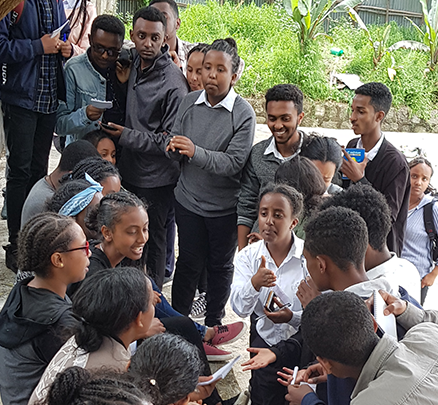
Recognizing this requirement, the IA initiates GO-Green Eco-Club approach, which encourages and supports school children to become involved in group activities for this purpose. These activities vary from one club to another, but student experiences and successes will be shared with other students through a bimonthly newsletter as well as through national and regional exchange programmes.
2.4.1 ENVIRONMENTAL EDUCATION THROUGH ECO-CLUBS APPROACH
Environmental Education For All
The program focuses on educating people of all ages about the value of conserving natural and agricultural resources on creating excitement and enthusiasm for green practices, lifestyles, products, services and technologies available to Africans using an environmentally responsible forum of education and networking
Perhaps never before have the needs of human society and the objectives of education been so closely linked, nor has education ever had so compelling a rationale and so urgent a responsibility to contribute to the societal change needed to ensure the survival of the planet and a sustainable future..– Jean Perras, Learning for a Sustainable Future.
Initiative Africa (IA) supports and advances education for sustainable living. Through its initiative Environmental Education For All, IA offers expertise, inspiration, and support to the green schools movement in elementary and secondary education. Green schools prepare students to become leaders and citizens who understand how the natural world works, see the patterns that connect human activity to nature, and have the knowledge, values, and skills to act effectively on that understanding. Because students learn from the school’s actions as well as from teachers and assignments, all of the school’s decisions and practices become teaching opportunities. Schools teach by classroom lessons, but also by the food they serve in the dining hall, the ways they use energy and resources, the processes by which they make decisions, and their relationship to the larger community.
Being a green school is an evolving process. Schools begin with actions that are appropriate to their resources, histories, and levels of understanding. Large changes often begin with small steps. The Initiative Africa “Go Green Program” has identified steps to a green schools that is particularly fertile for initializing green schools.
Environmental education is a lifelong multi-disciplinary approach to learning that helps people to understand and appreciate the environment and their connection to and impact on it.
Environmental education is a process which develops awareness, knowledge and understanding of the environment, positive and balanced attitudes towards it and skills which will enable students to participate in assessing the state of the environment. Environmental education prepares us for an ecologically sustainable future. It empowers individuals to maintain and restore the Earth’s natural systems and fosters support for the well being of future generations by promoting sustainable lifestyles. This requires understanding of the need to achieve a balance between the environmental, social and economic impacts of development.
This Environmental education for all initiative is designed to guide schools in developing and enhancing environmental education programs that equip students with the understandings and skills required for active and informed participation in managing the environment. Most importantly, the initiative aims to produce students who understand the importance of caring for the environment and minimizing society’s impact on the environment, in order to secure a better quality of life for present and future generations.
Environmental Education (EE) does not exist as an independent subject in the Ethiopian formal education at the primary and secondary levels. However, in the classroom, it is often pointed out that the emphasis is placed on how to prepare for examinations and therefore the pedagogy is biased towards how to help children memorise matters related to it.
This situation is decidedly detrimental to raising the environmental awareness of children. Children need learning opportunities “in” the environment, or “learning by doing,” to get sensitised to environmental issues, especially at the primary and secondary levels, as EE theorists emphasize. Recognizing this requirement, the IA initiates GO-Green Eco-Club approach, which encourages and supports school children to become involved in group activities for this purpose. These activities vary from one club to another, but student experiences and successes will be shared with other students through a bimonthly newsletter as well as through national and regional exchange programmes.
2.4.2 The objectives of the programme are:
INITIATIVE AFRICA , Along with relevant stakeholders , hopes to involve the masses across the country in an environment conservation movement by triggering a chain reaction that starts from school children - the ‘early adopters’ – and moves on to include society and ultimately the decision makers.
The ‘Go Green Afrique – Africa Fair’ is initiated by Initiative Africa and implemented in cooperation with African Renewable Energy Alliance (AREA), Cordaid, the Ethiopian Chamber of Commerce, the Heinrich Boell Stiftung (HBS), the Horn of Africa Regional Environment Centre and Network (HoA-REC/N), the Pan African Youth Union (PAYU), Population Health Environment (PHE) , Ethiopia Consortium and the World Future Council (WFC) to promote sustainable living and production as well as environmentally friendly alternatives.
The Fair’s aim is twofold. It aspires to raise the consumers’, businesses’ and public sector’s awareness and knowledge regarding necessity and implementation of environmentally sound practices and the availability and procurement of new green solution. At the same time it aims at supporting environmentally responsible acting business to make this concern a selling factor, reach consumers enter into new markets and establish or expand contacts and collaborations with other businesses, governmental institutions and the NGO/CSO sector. Therefore the ‘Go Green Afrique-Africa Fair’ is combining elements of a trade Fair and a knowledge exchange.
The ‘Go Green Afrique – Africa Fair’ is an event not only focusing on a special area of environmentally friendly technologies and products but is rather examining the diversity of products and solutions delivering environmentally beneficial and economically more sustainable outcomes across all industry sectors. Its success will depend on educating and mobilizing the public in Ethiopia and in Africa, and turning the environmental challenge into an ‘action multiplier’ that catalyzes progress on many fronts.
The Fair and its diverse supporting programme will bring together community groups, corporations, businesses, nonprofit, government agencies and citizens to share knowledge about new environmentally friendly technologies and ideas that can immediately change people’s daily lives and help bring about a more sustainable future.
The main objectives of the first GO- GREEN Afrique – Africa Fair are to:
The 'Go Green Afrique- Africa Fair' is created by a group of organizations who are passionate about offering environmentally sound solutions to support Ethiopia’s and Africa’s transition towards environmentally sustainable development.
We very much welcome everyone sharing this goal to participate in the Fair or support it as Sponsor or to ensure its success.
Welcome !
Our website makes it easier than ever to learn about our projects, training, and publications. Enjoy exploring Initiative Africa.
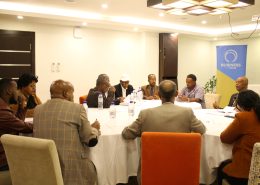
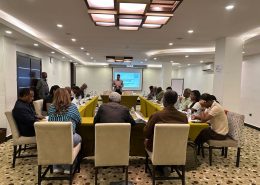
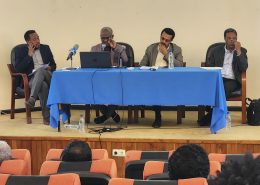
Initiative Africa Planned to orgaize a one day photograph Exhibiton on October ,2012 for the project entitled "Support to Quality Education for All "that focus ib Math and Science education, environmentl education and life skill development.
The Exhibition includes overview of each sub grantee project chievements with pictures,panel discussion the experience of IA partners and invitees will be from Ministry of education, SIDA mangers and opens to public partcipant.
Welcome Filmmaker. The next AIFF will take place in May 14-19, 2013. We are always looking for new and exiting documentaries to present to our audiences. We acept long and short documentaries. Please email at info@addisfestival.org to get full version of rules and regulations.
Final Deadline: March 13, 2013
|
10793
VISITORS |
|
|